If you have fully embraced the "Silver Sister" transition, you know the goal: a vibrant, reflective, "Liquid Silver" finish that commands attention. But for thousands of women across the US, that pristine white is being hijacked by a dull, brassy, or even orange tint that no amount of purple shampoo seems to fix.
The truth? Your issue isn't brassiness—it's rust.
In 2026, the global hair care community has shifted its focus. We are no longer just "toning" hair; we are chelating it. This article provides a comprehensive 2,000-word deep dive into why your tap water is the enemy of your gray hair and how a dedicated mineral detox can restore your natural brilliance.
The Science of the "Yellow Shift"
To solve the problem, we must first understand the chemistry of gray hair. Unlike pigmented hair, gray and silver strands are essentially "hollow." The absence of melanin (the pigment that gives hair its color) leaves the hair shaft more porous and susceptible to environmental intruders.

Why Your Gray Hair Acts Like a Sponge:
When you step into a shower fed by hard water, your hair absorbs more than just moisture. It absorbs dissolved solids. According to 2026 water quality reports, over 85% of US households have hard water containing high concentrations of calcium, magnesium, and heavy metals.
-
Iron & Manganese (The "Rust" Factor): These minerals oxidize when exposed to air and water. On a silver head of hair, this results in a literal "rusting" effect, turning your cool-toned hair a stubborn, muddy yellow.
-
Copper (The "Green" Tint): Often found in older plumbing, copper attaches to the hair and creates a dingy, greenish-gray cast that saps the hair of its light-reflectivity.
-
Calcium & Magnesium (The "Matte" Film): These minerals create a scaly build-up (soap scum) on the hair cuticle. This film acts like a "matte topcoat," preventing light from reflecting off your silver strands and making the hair feel like straw.
The 2026 Insight: Purple shampoo is a "color-corrector." It adds a violet stain to mask yellow. But if your yellowing is caused by iron, adding purple pigment just creates a "brownish" muddy mess. You don't need to add color; you need to subtract minerals.
Proving the Buildup: Is This Your Problem?
Before investing in a new regimen, you need to confirm that minerals are the culprit. Perform these three diagnostic tests at home:
-
The "Lather" Lag: Does your shampoo feel like it’s struggling to foam? Hard water minerals react with surfactants, reducing lather by up to 75%. If you’re using more product than usual, you have buildup.
-
The Sunlight Contrast Test: In natural midday sun, hold the ends of your hair up against the roots. If the ends look significantly darker or more "toasted" than the silver at the scalp, you are seeing years of accumulated mineral "plating."
-
The Texture Check: Run a strand of hair between your thumb and forefinger. Does it feel "waxy" or "crunchy"? Natural gray hair is often coarse, but mineral-laden hair feels "coated" even after a deep condition.
The 2026 Solution: The "Chelating" Protocol
In the world of high-performance hair care, there is a massive difference between a clarifying shampoo and a chelating treatment.
Clarifying vs. Chelating: What’s the Difference?
-
Clarifying: Acts like a powerful soap. It removes surface oils, dry shampoo, and hairspray. It’s a "surface-level" clean.
-
Chelating: Acts like a chemical magnet. Chelating agents (like Tetrasodium EDTA or Sodium Phytate) have "molecular claws" that reach inside the hair shaft, bond to heavy metals (iron, copper, lead), and pull them out so they can be rinsed away.
The Step-by-Step Mineral Detox Routine
To achieve "Liquid Silver," follow this professional-grade protocol once every two weeks:
-
The Pre-Wash Magnet: Apply a mineral-removing spray (like the 2026 Crystal Reset) to dry hair. Let it sit for 3–5 minutes. This begins breaking the ionic bond between the minerals and your hair proteins.
-
The Chelating Cleanse: Wash with a high-pH chelating shampoo. Focus on the mid-lengths and ends, where the most buildup occurs. Massage for at least 60 seconds to allow the "claws" to work.
-
The Acidic Balance: Hard water is alkaline (pH 8.5+), which forces the hair cuticle open and makes it look frizzy. Follow your detox with an Apple Cider Vinegar (ACV) rinse or a pH-balancing sealer (pH 4.5). This "shuts" the cuticle, locking in shine and locking out new minerals.
-
Deep Re-Hydration: Because chelating is a "deep" clean, it can temporarily leave hair feeling naked. Apply a moisture-rich mask containing squalane or hyaluronic acid to restore the lipid barrier.
Advanced 2026 Hardware: The Shower Filter Revolution
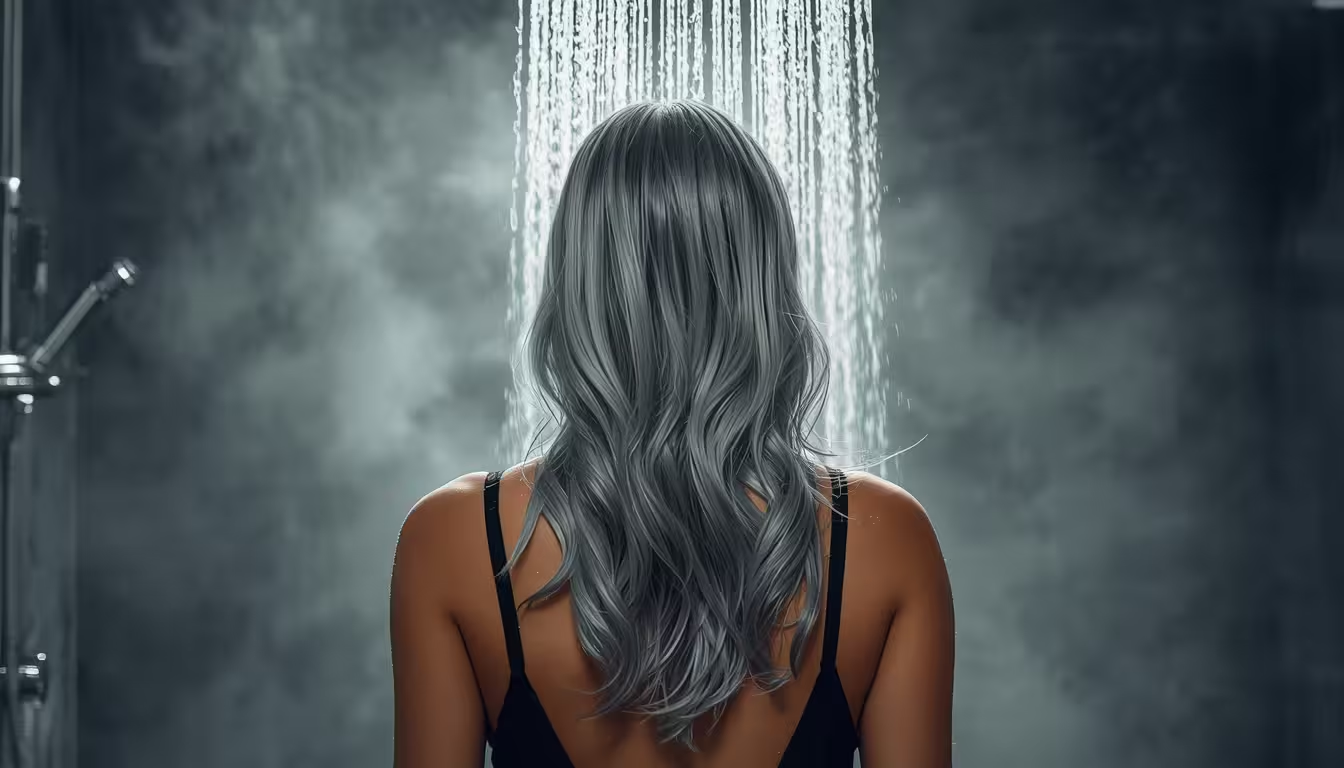
You cannot "detox" your way out of a daily "re-tox." If you are washing your hair 3–4 times a week in hard water, your hair is being re-contaminated every 48 hours.
The Filter Cheat Sheet:
-
Standard Carbon Filters: These are great for removing chlorine (which causes dryness) but do almost nothing for heavy metals or minerals.
-
KDF-55 & KDF-85 Filters: These are the 2026 gold standard. KDF (Kinetic Degradation Fluxion) media uses a copper-zinc redox reaction to neutralize lead, mercury, and iron.
-
Vitamin C Filters: These are highly effective at neutralizing chloramines, which can otherwise "yellow" delicate silver hair over time.
Comparison: Toning vs. Detoxifying
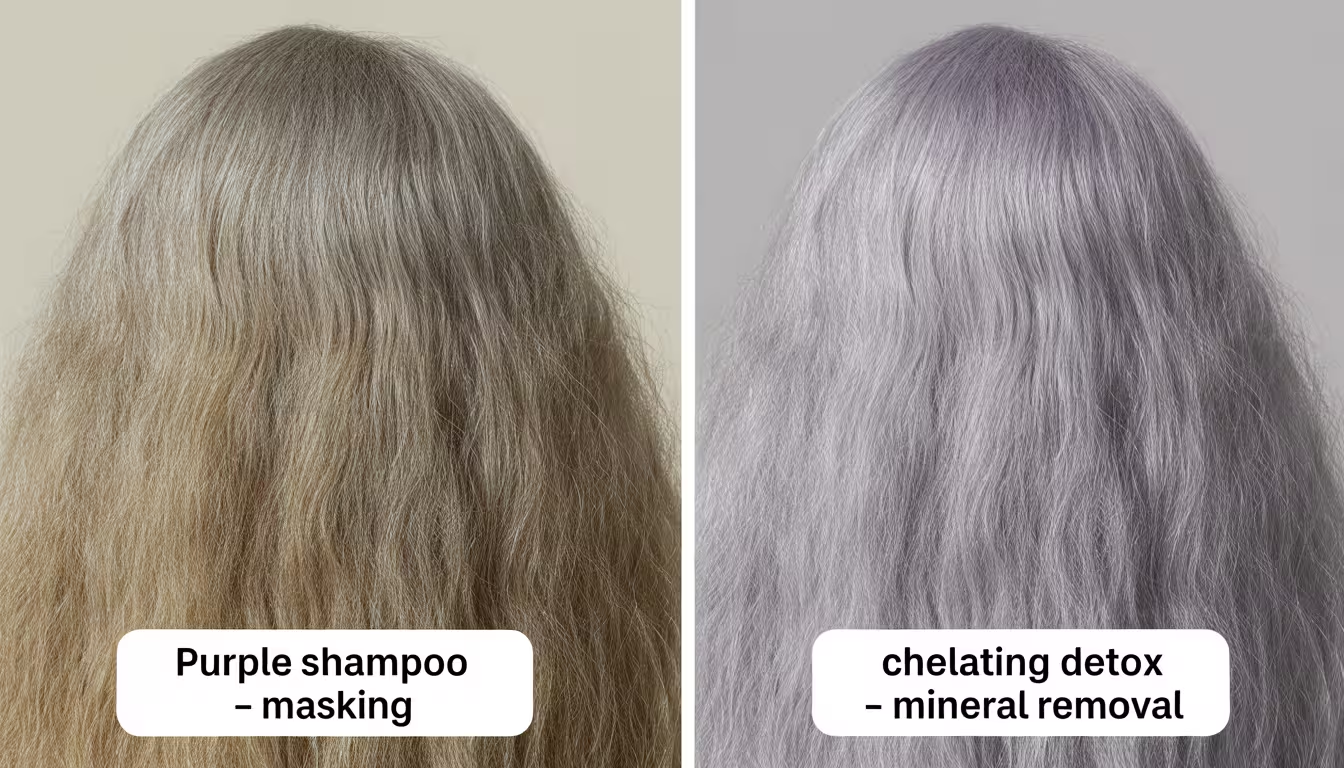
| Feature | Purple Toning (The Old Way) | Mineral Detox (The 2026 Way) |
| Method | Deposits purple dye to "mask" yellow. | Removes the iron/copper causing yellow. |
| Hair Health | Can lead to "pigment buildup" and dullness. | Restores natural bounce and porosity. |
| Longevity | Fades in 1–2 washes. | Lasts 2–4 weeks depending on water. |
| Best For | Sun-bleached or heat-damaged hair. | Well-water or City-water mineral stains. |
| Result | "Smoky" or "Violet-Gray." | Bright, high-shine "Liquid Silver." |
Identifying the "Hidden" Minerals in Your Region
Depending on where you live in the US, your "Silver Sister" struggle will vary:
-
The Rust Belt (Midwest): High iron content. Your hair will turn a "burnt orange" or warm gold.
-
The Southwest: High calcium and magnesium. Your hair will feel "chalky" and lose all its volume.
-
The Northeast: Older copper piping. Your hair may take on a "muddy" or ashy green cast.
Expert Tip: Use the 2026 "Water Map" Apps to check the TDS (Total Dissolved Solids) in your specific zip code. If your TDS is over 150 ppm, a bi-weekly chelating detox is non-negotiable for silver hair.
2026 Buying Guide: Top-Rated Products for the Silver Sister Detox
To achieve that 2026 "Liquid Silver" standard, you need specific chelating agents. Unlike standard clarifying shampoos, these products are formulated to seek out and destroy mineral bonds.
| Brand & Product | Why it's a 2026 Must-Have | Best For |
| Malibu C Hard Water Wellness | The gold standard. Uses a crystal-gel technology to pull out iron and copper. | Heavy "well water" users. |
| K18 Peptide Prep Detox | Uses activated charcoal and salicylic acid alongside peptides to protect hair while cleaning. | Damaged or fragile silver hair. |
| OUAI Detox Shampoo | Infused with Apple Cider Vinegar to lower pH and dissolve calcium film. | Weekly maintenance for city dwellers. |
| L'Oréal Metal Detox | Features patented Glicoamine technology to penetrate deep into the fiber. | High copper or lead environments. |
The DIY Vitamin C "Mineral Reset" (2026 Recipe)
If you prefer a natural, "clean beauty" approach, you can create a high-potency chelating treatment in your own kitchen. Ascorbic acid (Vitamin C) is a powerful antioxidant that effectively neutralizes chlorine and breaks down iron stains.
What You’ll Need:
-
2 tablespoons of pure Ascorbic Acid powder (Fine-grain is best).
-
1/2 cup of distilled water (Distilled is key—don't use the hard water you're trying to fix!).
-
1 tablespoon of Aloe Vera gel (to prevent dryness).
The Process:
-
Mix: Combine the powder and distilled water in a spray bottle. Shake until completely dissolved, then add the Aloe Vera.
-
Apply: Spray generously onto dry hair until saturated. Focus on the yellowest areas.
-
Wait: Wear a shower cap for 15–20 minutes. Do not let it dry out completely.
-
Rinse & Seal: Rinse thoroughly with lukewarm water. Follow with a deep conditioner to restore the lipid barrier.
The Hardware Upgrade: 2026’s Best Shower Filters
You cannot detox your way out of a daily "re-tox." To keep your hair from yellowing between treatments, you must filter the water at the source. In 2026, the market has moved beyond simple carbon filters to advanced redox media.
-
Weddell Duo: The top-rated filter of 2026 for heavy metal removal. It utilizes a dual-chamber system that targets both chlorine and dissolved lead/iron.
-
Jolie Filtered Showerhead: Combines aesthetic luxury with KDF-55 and Calcium Sulfite, specifically designed to stop "hard water hair" before it starts.
-
Sprite Slim-Line 2: An affordable, NSF-certified option that uses Chlorgon and KDF to reduce scale buildup in high-calcium areas.
Long-Term Silver Maintenance Checklist
To maintain your 2,000-word goal of hair perfection, follow this "Silver Sister" sustainability plan:
-
The "Clear Slate" Rule: Always detox your hair before you go to the salon for a trim or toning session. Removing minerals ensures your professional products work 100% better.
-
Micro-Dosing ACV: Keep a spray bottle of 1-part ACV to 10-parts water in your shower. A quick spritz after every wash keeps the pH low and prevents minerals from "sticking."
-
Embrace the Texture: Remember that silver hair is naturally more wiry. A detox removes the "crunchy" mineral feeling, but you still need high-quality Squalane or Argan oils to give it that soft, touchable finish.
Frequently Asked Questions (FAQ)
Q: Can hard water cause gray hair?
A: No, hard water does not cause the biological process of graying (which is genetic and age-related). However, it can make silver hair look "dirty," darker, or stained, making you feel like your transition is "failing."
Q: How do I detox my hair from hard water at home?
A: The most effective method is a "Chelating Wash." Use a shampoo with EDTA or a DIY Vitamin C rinse (crushed Vitamin C powder mixed with water) to break the mineral bonds, followed by a moisturizing mask.
Q: Does hard water turn grey hair yellow?
A: Yes, specifically iron and manganese. When these minerals "rust" on the hair fiber, they create a yellow/orange stain that is very difficult to remove with regular soap.
Q: How do you know if you have mineral buildup in your hair?
A: Look for hair that is dull, frizzy, tangled at the ends, or has a yellow/green tint that doesn't respond to purple shampoo. Another sign is a lack of lather when you wash.
Q: What is the best mineral remover for gray hair?
A: Professionals in 2026 recommend products containing Sodium Phytate or Ascorbic Acid. Brands like Malibu C and K18 offer high-performance chelators that are safe for the "Silver Sister" transition.
Conclusion: The New Burden of Proof for Silver Hair
Embracing gray hair in 2026 is no longer about "giving up"—it's about a high-maintenance commitment to purity. Your silver hair is a canvas that reflects your environment. If that environment includes "hard" tap water, your hair will tell the story through yellowing and dullness.
The "Liquid Silver" look isn't a secret; it's a science. By moving away from the "masking" properties of purple shampoo and adopting a Hard Water Mineral Detox, you are removing the barriers between you and your most brilliant self. Stop fighting the yellow—remove the rust.