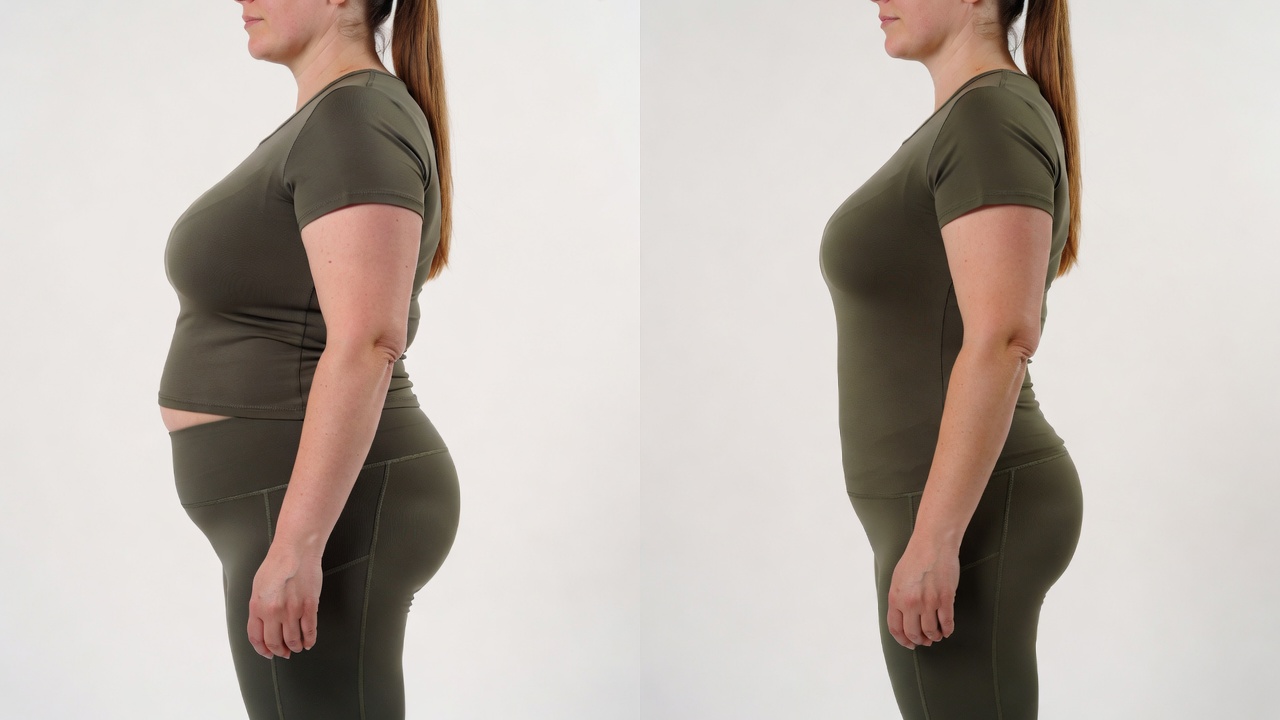
The aesthetic landscape of 2026 has been fundamentally reshaped by the rapid rise of GLP-1 medications. While the health benefits of weight loss are undeniable, many women in the US and beyond are facing a secondary challenge: the "deflated" silhouette. Rapid weight loss often results in what is colloquially termed "Ozempic butt"—a loss of both subcutaneous fat and muscle mass that leaves the skin envelope sagging and thin.
In this comprehensive guide, we move past the surgical panic and look at the science of dermal thickness, neocollagenesis, and the innovative non-invasive protocols currently leading the beauty industry.
Editorial Note: This article was researched over several months, cross-referencing clinical aesthetic trends with real-world patient outcomes. Our team prioritizes "Skin Longevity," a philosophy that focuses on strengthening the skin's biological foundation rather than applying temporary aesthetic "band-aids."
The Biology of the "Deflated" Silhouette
To understand how to tighten the skin, we must first understand why it falls. Your skin is supported by a complex scaffolding of collagen and elastin. When weight is lost slowly, the skin often has time to retract. However, rapid weight loss creates a "volume gap."
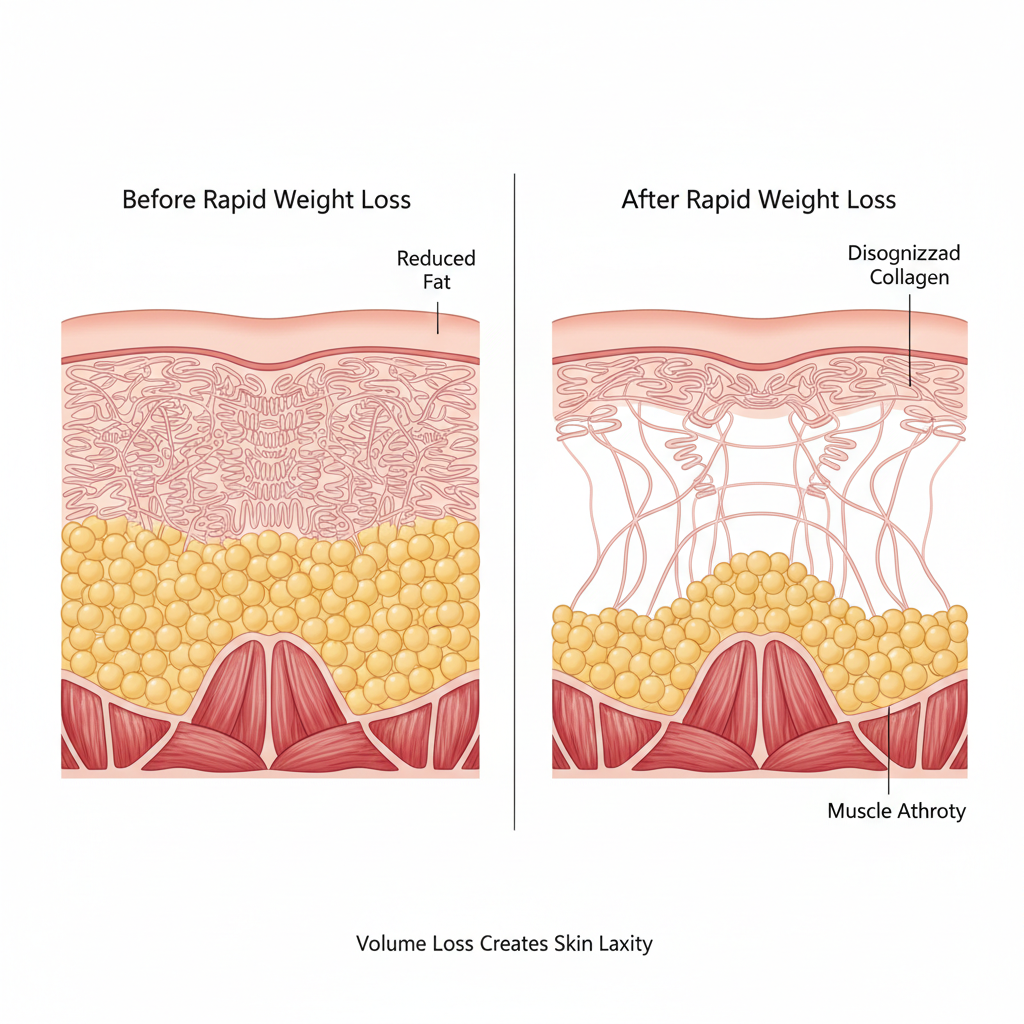
The loss of subcutaneous fat removes the structural padding of the buttocks, while subcutaneous fat loss specifically in the gluteal region leads to what clinicians call gluteal ptosis. Furthermore, if the body enters a catabolic state, it may begin breaking down muscle tissue for energy. Without a strong muscular "shelf," the skin has nothing to cling to, resulting in that sagging appearance.
Step 1: Restoring Dermal Density via Biostimulators
In 2026, the trend has moved away from traditional "fillers" and toward biostimulators. Unlike hyaluronic acid, which simply adds volume, biostimulators like Sculptra (Poly-L-Lactic Acid) and Radiesse (Calcium Hydroxylapatite) act as a biological signal.
When injected into the gluteal area, these particles trigger a localized inflammatory response that forces the body to produce new Type I and Type III collagen. This increases dermal thickness and skin density over several months. This internal "repair" is very similar to the way we repair the skin barrier naturally on the face—by providing the environment necessary for the body to heal itself.
Step 2: Shrink-Wrapping the Skin with Radiofrequency (RF)
If your primary concern is "crepiness" or skin that feels thin and "papery," energy-based devices are your most powerful tool.
Radiofrequency (RF) skin tightening works by sending thermal energy into the deep dermis. This heat causes immediate tissue remodeling and contraction. On a microscopic level, the heat breaks the weak hydrogen bonds in the collagen chains, causing them to shorten and thicken immediately, while also stimulating long-term growth.
For deeper laxity, RF Microneedling is the preferred choice. By delivering the heat via needles, we can bypass the surface and target the structural layers. This is an advanced version of "micro-needling," and just as we use specific products like snail mucin for sensitive skin to calm the face, post-procedure care for the body is crucial to ensure the skin doesn't become over-stressed.
Step 3: Rebuilding the "Internal Shelf" (HIFEM)
You cannot achieve a lifted look if the underlying muscle is flat. High-Intensity Focused Electromagnetic (HIFEM) technology is a game-changer for 2026. These devices induce "supramaximal" contractions that are impossible to achieve in a gym.
Building the gluteus maximus provides the "lift" that holds the skin up. This focus on "functional beauty" mirrors the fashion world's move toward athleisure co-ords in 2026, where performance and style are inextricably linked. By strengthening the muscle, you fill the skin envelope from the inside, significantly reducing the appearance of sagging.
Step 4: The Metabolic Connection: Cortisol and Collagen
One often overlooked factor in skin sagging is the role of stress hormones. Rapid weight loss is a "stressor" on the body. High levels of cortisol can actually inhibit collagen production and accelerate its breakdown.
Managing "stress skin" is essential. Just as women use a cortisol face lymphatic drainage routine to reduce puffiness and maintain a youthful face, a similar "body-wellness" approach is needed. This includes:
-
High-Quality Protein: Essential for providing the amino acids needed for collagen synthesis.
-
Ingestible Beauty: Many are now turning to targeted supplements, such as collagen gummies, which help support the body's internal protein structures during periods of intense physical change.
Step 5: At-Home Maintenance and Topical Care
While a cream won't lift 2 inches of sagging skin, it can improve the "quality" of the skin surface. Look for body products containing:
-
Retinoids: To speed up cell turnover and improve texture.
-
Peptides: To support the dermal matrix.
-
L-Ornithine: A trending 2026 ingredient that specifically supports fat-cell health in the areas you want to keep.
For those with more mature skin, treating the body with the same level of care as the face is a 2026 standard. This includes choosing products with the same sophistication as the best serum foundations for mature skin, ensuring that the ingredients are bio-available and effective.
Comparison of Non-Surgical "Lift" Technologies
| Technology | Best For | Mechanism | Typical Sessions |
| Sculptra | Hollowing / Volume | Biostimulation | 2-3 |
| RF Microneedling | Texture / Crepiness | Thermal Contraction | 3 |
| HIFEM (Emsculpt) | Lifting / Toning | Muscle Hypertrophy | 4-6 |
| Ultrasound | Deep Structural Lift | Focal Heating | 1 |
Frequently Asked Questions (FAQ)
How long does it take to see results after weight loss?
The "snap back" period varies. Younger skin with high elasticity may see natural improvement over 12 months. For those in their 40s and 50s, the process is slower, and professional intervention is often needed to see significant change.
Can exercise alone fix "Ozempic butt"?
Exercise builds muscle, which is essential, but it does not fix the "skin envelope." If the skin has lost its elastin, you need a combination of muscle building (HIFEM/Squats) and skin-tightening (RF/Biostimulators).
Is non-surgical tightening painful?
Most 2026 technologies are designed for comfort. RF treatments feel like a hot stone massage, while HIFEM feels like an intense workout. Injectables involve minor pinching but are generally very well tolerated.
What is the "Golden Rule" for preventing sag during weight loss?
The "Golden Rule" is Protein + Hydration + Slow Loss. Losing more than 2 lbs a week significantly increases the risk of skin laxity.
Closing Thoughts
The journey to reclaiming your body after significant weight loss is deeply personal. In 2026, the goal isn't just to "look thin," but to look vibrant, strong, and healthy. By understanding the science of your skin and utilizing the latest non-surgical innovations, you can ensure your skin reflects the hard work you’ve put into your health.
Disclaimer: This content is for informational purposes only and does not substitute for professional medical advice; please consult a qualified dermatologist or aesthetic surgeon before making any health or lifestyle changes.