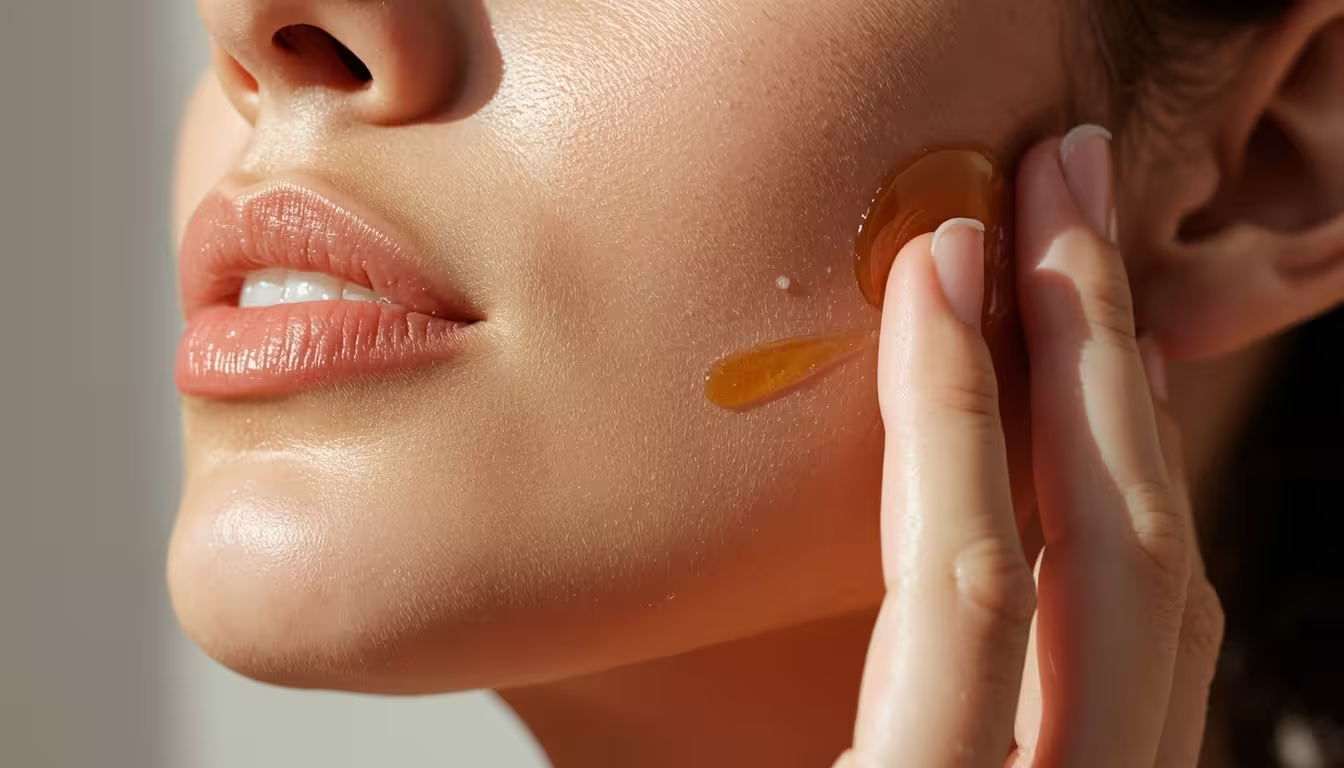
You’re hydrated, you watch your sodium, yet you wake up with a persistently puffy face, a softened jawline, and under-eye bags that no eye cream can touch. If this sounds familiar, the culprit may not be your diet, but your stress hormones. Cortisol face—the bloating, inflammation, and fluid retention caused by chronic stress and elevated cortisol levels—is a pervasive 2026 wellness concern. Unlike generic weight gain, cortisol puffiness targets specific areas: the jawline, under the chin, beneath the eyes, and the upper cheeks. The most effective, natural countermeasure is a targeted cortisol face lymphatic drainage routine. This specialized practice goes beyond generic facial massage; it’s a systematic method to manually flush stagnant lymph, reduce inflammatory cytokines, and counteract the physical toll of stress. This definitive guide provides a science-backed, step-by-step routine you can perform at home to sculpt, depuff, and reclaim your defined facial contours.
Part 1: The Science of "Cortisol Face" – Why Stress Swells Your Face
To treat the symptom, you must understand the cause. Cortisol, your body's primary stress hormone, has a direct and multifaceted impact on your face.
-
Fluid Retention & Lymphatic Stagnation: Chronic stress and high cortisol disrupt the renin-angiotensin-aldosterone system (RAAS), which regulates fluid and electrolyte balance. This can lead to systemic water retention. Simultaneously, stress causes muscular tension in the neck, shoulders, and jaw, physically compressing the lymphatic vessels—the body's drainage network. This one-two punch traps inflammatory fluid and metabolic waste in the facial tissues.
-
The Jawline & Neck Connection: The submental and submandibular lymph nodes sit directly under the jaw and chin. When you're stressed, you often clench your jaw and hunch your shoulders. This chronic tension is like stepping on a garden hose, blocking the primary drainage pathways for your face and head, leading to jawline swelling and a less defined profile.
-
Inflammation Cascade: Cortisol is inflammatory at chronically high levels. It promotes the release of pro-inflammatory cytokines, which increase blood vessel permeability, allowing more fluid to leak into interstitial tissues, creating puffiness.
-
Fat Redistribution: Long-term cortisol exposure can even lead to visceral fat accumulation, including in the face and neck area, contributing to a rounder, less defined appearance.
A generic skincare or weight-loss approach misses these physiological mechanisms. A cortisol-focused lymphatic drainage routine directly addresses them by manually encouraging lymph flow, releasing muscular tension, and signaling the parasympathetic nervous system (the "rest and digest" state) to lower cortisol.
Part 2: The Pre-Routine Essentials: Setting the Stage for Success
Your environment and preparation are crucial for maximizing the routine's anti-stress benefits.
-
Timing is Everything: Perform this routine first thing in the morning (to address overnight fluid pooling) or in the evening (to release the day's tension). Consistency is key—aim for 5-10 minutes daily.
-
Create a Calming Environment: Dim the lights, play soft music or nature sounds, and ensure you won't be interrupted. This transitions your nervous system out of fight-or-flight mode.
-
Prep Your Skin & Tools:
-
Cleanse: Start with a clean face.
-
Lubrication is Non-Negotiable: Apply a generous amount of facial oil or a rich, silicone-free serum. You must be able to glide your tools or fingers without tugging the skin. Oils like jojoba, rosehip, or squalane are ideal.
-
Choose Your Tool (Optional but Recommended):
-
Gua Sha Stone (Jade or Rose Quartz): Excellent for broader, gliding strokes. Keep it cool in the fridge for an extra depuffing effect.
-
Lymphatic Drainage Roller: Features smaller, multiple rollers designed to mimic the light pressure of manual drainage.
-
Your Hands: Perfectly effective. Use your knuckles and fingers as described below.
-
-
Read Also : 2026 PFAS-Free Mascara Guide
The 2026 Cortisol Face Lymphatic Drainage Routine (Step-by-Step)
This routine follows the natural anatomy of your lymphatic system, moving fluid from the center of the face outward and downward toward the major drainage nodes.
Golden Rules:
-
Pressure: Feather-light. You are moving fluid, not massaging muscle. Imagine the pressure you'd use to stroke a newborn's cheek or smooth a piece of delicate tissue paper.
-
Direction: Always move toward the lymph nodes. The primary drainage points for the face are located behind the ears, under the jawline, and in the hollows above the collarbones (supraclavicular nodes).
-
Breathing: Inhale deeply through your nose, exhale slowly through your mouth. This diaphragmatic breathing activates the parasympathetic nervous system and enhances lymphatic flow.
Step 1: Neck & Collarbone Clearing (The "Drain Opener")
You must clear the "drain pipes" (the neck) before you can effectively drain the "sink" (the face).
-
Apply oil to your neck and chest.
-
Using the flat side of your Gua Sha or your knuckles, make long, gentle, downward strokes from just behind your ear, down the side of your neck, ending in the hollow above your collarbone.
-
Repeat 5-7 times on each side of the neck.
-
Finish with a few gentle strokes directly along the collarbone from shoulder to sternum.
Step 2: Jawline & Chin De-Tensioning (Targeting Cortisol Clenching)
This step directly addresses jaw swelling and submental puffiness.
-
Place your knuckles or the curved edge of your Gua Sha under the center of your chin.
-
Apply light pressure and slowly drag outward along the jawbone, all the way to just below your earlobe. Imagine you are "scooping" fluid toward the nodes behind your ears.
-
Repeat this stroke 7-10 times on each side of the jaw.
Step 3: Cheek & Under-Eye Drainage
Targets mid-face puffiness and under-eye bags.
-
Start at the inner corner of your eye, just beside your nose.
-
Using your ring finger or the narrow edge of your tool, glide gently along the under-eye area (on the orbital bone, never on the eyelid itself) outward toward the temple and then curve down toward the top of your ear.
-
For the cheeks, start at the sides of your nostrils and glide upward and outward toward the temples, then down toward the ears.
-
Perform 5-7 strokes per pathway.
Step 4: Forehead & Brow Smoothing
Releases tension held in the frontalis muscle, which can contribute to a stressed appearance.
-
Start at the center of your forehead, between your eyebrows.
-
Glide horizontally outward toward your temples with very light pressure.
-
From the eyebrows, glide upward and slightly outward toward the hairline.
-
Repeat 5-7 times.
Step 5: Final Flush & Lymph Node Stimulation
Seals the routine by directing all fluid to the terminal drainage points.
-
Use your fingertips to make very gentle, circular motions directly on the three key lymph node areas:
-
Behind the ears
-
Under the jawbone (where it meets the neck)
-
In the hollows above the collarbones
-
-
Finish by taking three deep, diaphragmatic breaths, visualizing stress and fluid leaving your body.
Read Also : How to Fix Over-Exfoliated Skin Barrier Naturally
Amplifying Your Results: The Holistic 2026 Approach
This routine is powerful, but for lasting change, integrate these supporting habits to manage cortisol long-term.
-
Sleep Hygiene: Prioritize 7-9 hours of quality sleep. Sleep is when cortisol drops and cellular repair, including fluid balance, is optimized. Elevate your head slightly with an extra pillow to minimize gravitational puffiness.
-
Adaptogenic Herbs: Consider integrating adaptogens like Ashwagandha, Rhodiola Rosea, or Holy Basil into your routine (consult a healthcare provider first). These herbs help modulate the body's stress response and can support healthier cortisol levels.
-
Mindful Breathing & Vagus Nerve Toning: Practices like box breathing (4-4-4-4) or humming stimulate the vagus nerve, your body's superhighway to calm, directly counteracting the stress that causes puffiness.
-
Hydration & Nutrition: Drink ample water with electrolytes (like a pinch of Himalayan salt) to signal to your body that it's safe to release stored fluid. Reduce inflammatory foods like excess sugar, processed carbs, and alcohol, which exacerbate cortisol's inflammatory effects.
Frequently Asked Questions (FAQ)
Q: How long before I see results?
A: Immediate depuffing is common after the first session due to fluid movement. For lasting reduction in cortisol face and jawline swelling, consistent practice for 2-4 weeks is typically needed to see significant before-and-after changes.
Q: Can I do this with a Gua Sha?
A: Absolutely. A Gua Sha is an excellent tool for this routine. Use the curved edge for the jawline, the flat side for the cheeks and neck, and always maintain that feather-light pressure with plenty of oil.
Q: Is there a 5-minute version?
A: Yes. Focus solely on Steps 1 (Neck Clearing) and 2 (Jawline De-Tensioning). These two steps target the most critical congestion points for cortisol-related puffiness.
Q: Should I do it before or after skincare?
A: Always after cleansing and before your heavier moisturizers. Serums and oils will aid glide. You can follow the drainage routine with a moisturizer if needed.
Q: What about the neck?
A: The neck routine (Step 1) is non-negotiable. The face cannot drain efficiently if the neck pathways are blocked.
Conclusion: Your Face is a Map of Your Mind
Cortisol face puffiness is a physical message—a signal that your nervous system is overloaded. A targeted lymphatic drainage routine is more than a cosmetic fix; it is an act of self-care that directly communicates with your body's stress response and drainage systems. By dedicating just a few minutes each day to this gentle, intentional practice, you are not just sculpting your jawline; you are actively lowering inflammation, releasing held tension, and telling your body it is safe to rest. In the high-stress world of 2026, this routine is your natural, empowering tool to look and feel more defined, calm, and resilient from the inside out.