To really work “Retro Glamour” you have to see that fashion is not just about clothes, but it’s a running history of the times; a time line of social change, subversion and creativity. No matter if you are going for the jazz-induced liberation of the ’20s or are powering toward the neon-drenched excesses of the ’80s, dressing to impress calls for an eye for detail and a sense of silhouettes that shaped generations.
In this ultimate guide, we’re going to take a deep historical dive into the eras that formed the clothing canvas you would of worn last century…Plus offer you over 2,500 words of actionable advice; how-to-styling for your classic vintage inspired wardrobe + modern spins on said classics so that you still look relevant & not like *you just stepped off the Titanic.
What Does "Retro" Actually Mean?
As we prepare to raid the archives, let’s first dispel a popular myth. Many people use “vintage” and “retro” interchangeably, but in the industry, their definitions are apart. Vintage is an item of clothing that was made during the time that era and (usually) is at least 20 years old. Retro – retro refers to new clothing that is designed to mimic the older styles of previous decades.
"Retro Glamour" emphasizes the high-fashion, refined feeling of 1950s through the 1990s. Although anything pre-1920s is usually grouped in with “Antique,” the 1950s was when the retro revival really caught its stride; people were moving on from wartime rationing onto a world of leisure and celluloid beauty.
The Evolution of the "Dress to Impress" Philosophy
Over the decades, "Dressing to Impress" has come a long way with women’s changing roles in society. In the 1930s, it was about looking like a silver-screen goddess to distract people from the Great Depression. By the 1980s, it meant icing a boardroom topped with shoulder pads that communicated power. Today, it’s about mixing these historical cues with contemporary comfort.
And for those interested in broadening the horizon of style, it may be well worth investigating the ways various subcultures have to give these trends pops. Take the grit of femme rugged fashion juxtaposed with the glittering polish of 1950's glamour and you've got what "impressive" fashion can be when it’s as much about functional utility as it is sequins.
1. The Roaring 20s: The Birth of the Flapper
The ’20s was an era of utter rebellion. Women’s curves were encased in tight corsets; their hair was bobbed and they demanded the right to move — whether on the street, or dance.
-
The Silhouette: The "Garçonne" look. A straight, tubular silhouette that masked curves, with waistlines dropped and hemlines lifted just below the knee (risqué in its day!).
-
Key Elements: Heavy beadwork, silk fringe that “moves with the body’ and Art Deco patterns.
-
Modern Update: Say no to the “costume shop” plastic pearls. Instead, choose a beautiful velvet slip dress with understated Art Deco detailing and T-strap heels.
2. The 1930s: Hollywood’s Golden Age
As the world slowed down during the Depression, Hollywood sped up, offering a dream of unattainable luxury.
-
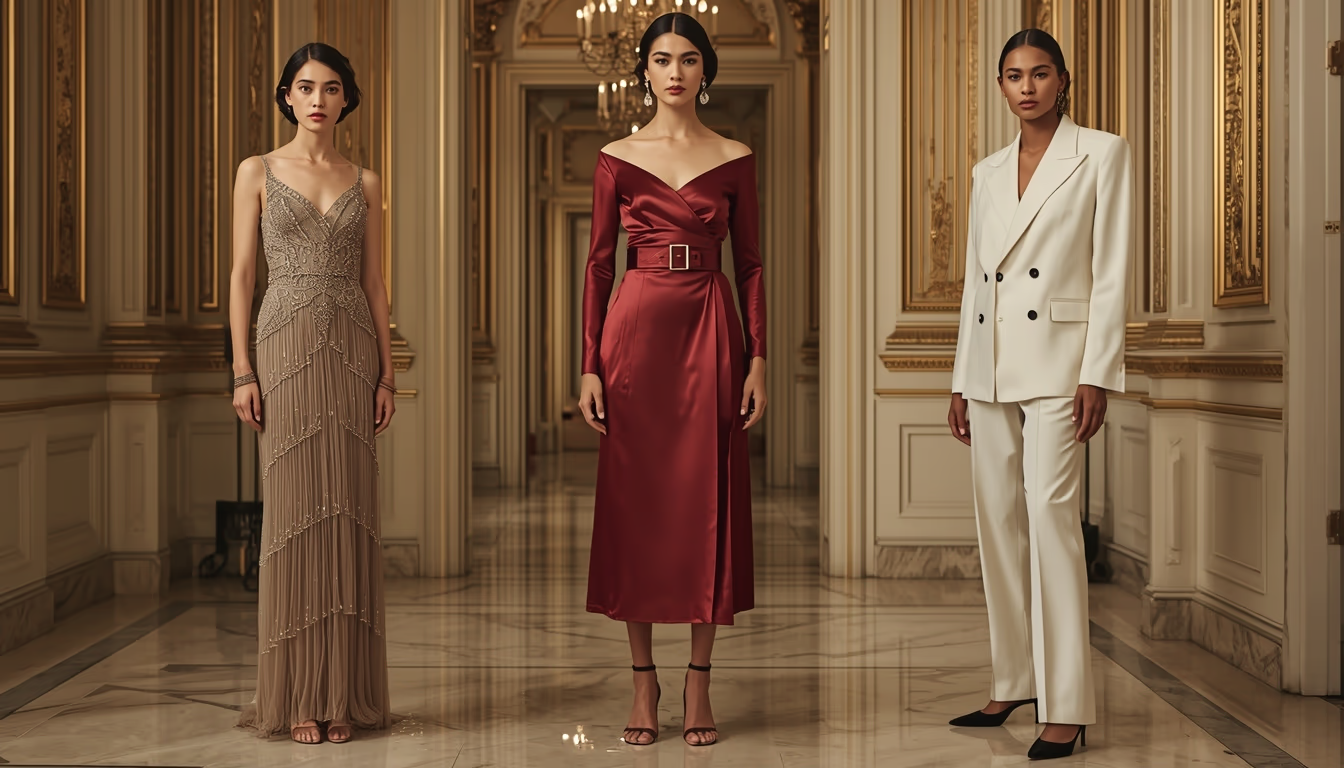
The Silhouette: The bias-cut gown. Invented by Madeleine Vionnet, this technique cuts fabric diagonally across the grain, allowing it to cling to the body’s natural curves elegantly.
-
Key Elements: Cowl necklines, open backs, and floor-length silk or satin.
-
Modern Update: A satin midi-skirt paired with a slim-fit turtleneck provides that 30s "Old Hollywood" elegance for a contemporary dinner date.
3. The 1940s: Wartime Chic and Utility
Fashion in the 40s was defined by rationing. Fabric was scarce, leading to shorter skirts and "make-do and mend" creativity.
-
The Silhouette: The "A-line." Broad shoulders (to mimic military uniforms) and narrow waists.
-
Key Elements: Peplum tops, rayon tea dresses, and victory rolls in the hair.
-
Modern Update: The strong-shouldered blazer was the offspring of this era. Pair one with a knee-length pencil skirt for a polished office statement.
4. The 1950s: The New Look and Pin-Up Culture
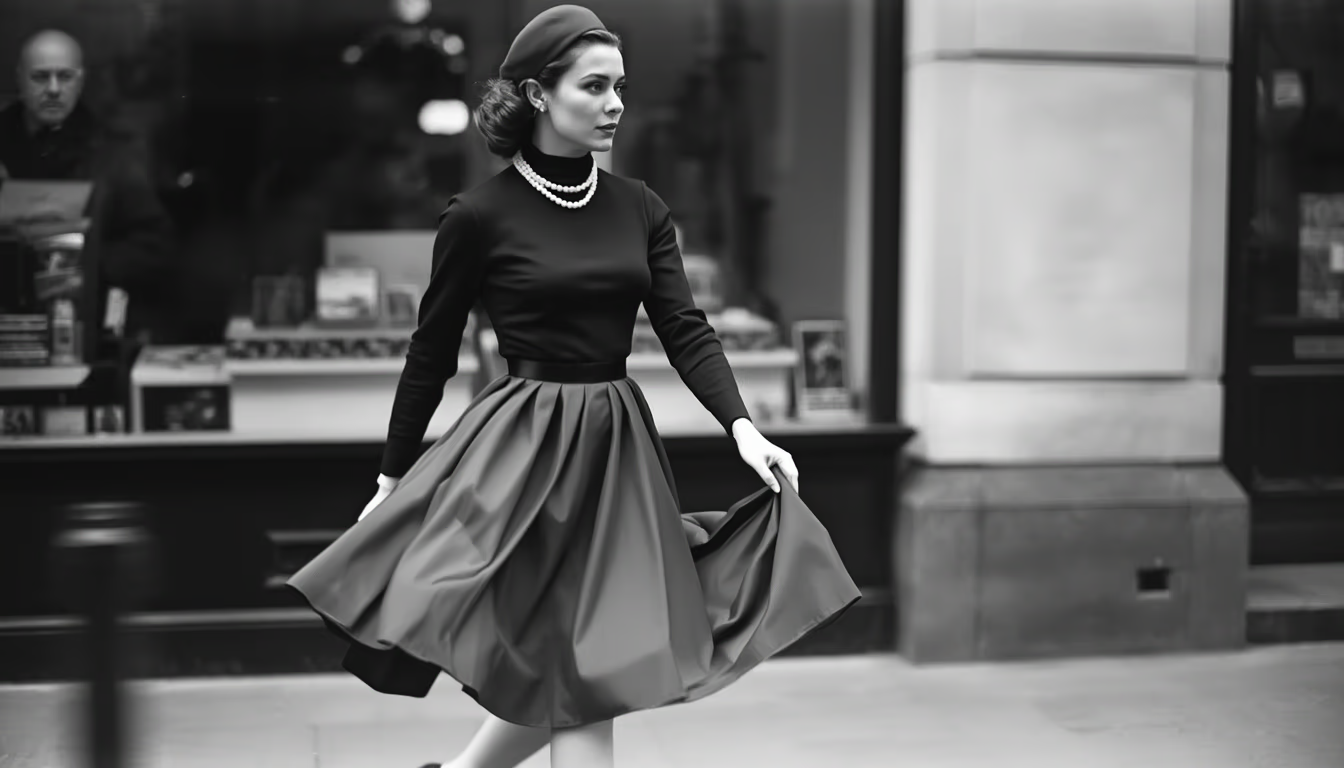
The 1950s were remade by Christian Dior’s “New Look” in 1947. After years of fabric rationing, the world was ready for volume.
-
The Silhouette: The hourglass. Think cinched waists and massive, full circle skirts.
-
Key Elements: Polka dots, crinolines, and the famous “Wiggle Dress” for a more daring pin-up look.
-
Modern Update: A high-waisted swing skirt is incredibly flattering and remains a staple for outfits for women over 50 who want to maintain a timeless, elegant profile.
5. The 1960s: Mod and the Youth Quake
The 60s saw fashion shift from following the lead of Paris couture to following the lead of the streets of London.
-
The Silhouette: The Shift and the Mini. Boxy, short, and liberating.
-
Key Elements: Go-go boots, PVC materials, and bold, psychedelic geometric prints.
-
Modern Update: A structured shift dress in a bright primary color is a perfect "retro glamour" choice for a cocktail party.
6. The 1970s: Disco Fever and Studio 54
The 70s were a dichotomy of "back to nature" bohemian styles and high-octane disco glamour.
-
The Silhouette: Long and lean. Flared trousers and wrap dresses.
-
Key Elements: Sequins, Lurex, platform heels, and the Diane von Furstenberg wrap dress.
-
Modern Update: High-waisted velvet flares paired with a metallic bodysuit can dominate any modern dance floor.
7. The 1980s: Power Dressing and Bold Excess
The 80s were about being seen. Wealth was loud, and fashion was even louder.
-
The Silhouette: The Inverted Triangle. Massive shoulder pads and slim bottoms.
-
Key Elements: Neon colors, lace gloves (à la Madonna), and oversized jewelry.
-
Modern Update: Take the "Power Suit" concept but choose a modern oversized fit in a muted pastel rather than neon. It maintains the authority without the "costume" feel.
8. The 1990s: Grunge to Minimalism
The 90s started with a "don't care" attitude and ended with sleek, sophisticated minimalism.
-
The Silhouette: Oversized or incredibly slip-like.
-
Key Elements: Plaid flannel, slip dresses over white T-shirts, and combat boots.
-
Modern Update: The silk slip dress is currently a wardrobe essential. Layer it with a leather jacket to bridge the gap between 90s grunge and modern luxury.
9. The Y2K Revolution: Futurism and Hip-Hop
As we entered the new millennium, fashion took a sharp turn toward the "Space Age" mixed with heavy influences from the music industry.

-
The Silhouette: Low-rise and tech-focused.
-
Key Elements: Velour tracksuits, metallic fabrics, and chunky sneakers.
-
The Connection: A lot of the Y2K aesthetic was inspired by the explosion of the music scene. For a look at how these styles intersected with urban cool, read our womens 2000s hip hop fashion guide that pinpoints this ephemeral point between retro and modern streetwear.
10. Rockabilly: The Timeless Rebel
Rockabilly isn't just a style; it's a subculture. Combining 1950s Americana with a rebellious edge, it’s a look that never truly goes out of style.
-
The Silhouette: Sharp and structured.
-
Key Elements: Dark denim with cuffed hems, leopard print, and the classic red lip.
-
Modern Update: A leather biker jacket over a 1950s floral swing dress is the ultimate "tough-meets-sweet" ensemble.
Masterclass: How to Do Retro Glamour Without Looking Like You’re in a Costume
The biggest fear people have when "dressing to impress" in retro styles is looking like they are heading to a Halloween party. Here is how to keep it sophisticated:
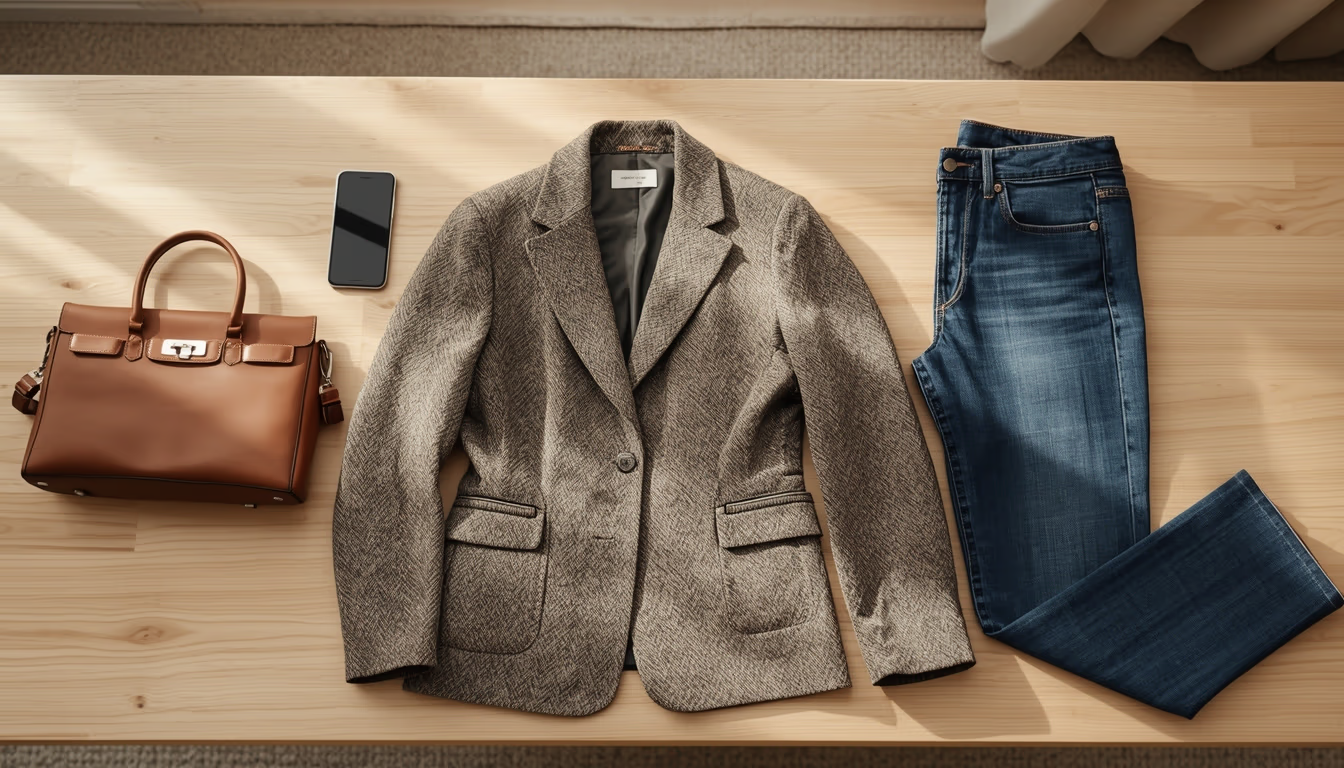
Rule 1: The 70/30 Principle
Never go 100% vintage. Follow the 70/30 rule: Make sure that 70% of your outfit is composed of contemporary or neutral basics and let the other 30% be your statement retro piece. Wear a real 1940s vintage brooch with a contemporary, structured white button-down and tailored jeans.
Rule 2: Invest in Tailoring
Vintage sizing is notoriously different than modern sizing. A “Size 12” of 1960 could be a “Size 4” today. Not the label, but the fit. If you stumble upon a gorgeous piece from a different era, have it tailored. There's no better way to "dress to impress" than with a perfectly tailored garment.
Rule 3: Modernize the Hair and Makeup
If you are sporting a 1950s dress, avoid the retro pin-up makeup and chunky victory rolls. Instead, go for a modern "no-makeup" look and loose natural waves. This creates a balanced, editorial look that feels intentional and high-fashion.
The Sustainable Impact of Retro Fashion
It may seem somewhat counterintuitive, but when fast fashion is involved, the fact of the matter is that retro and vintage fashion can be one of the most eco-friendly choices you make. You are recycling your clothes that have already proved they deserve to stay in circulation, and you’re keeping waste out of the landfill.
Moreover, old clothes tend to be better made. French seams, hand-sewn hems and top-quality natural fibers such as wool and silk are the norm in vintage clothing but have become rare birds in mass-market stores today. Committing to a vintage wardrobe isn’t just fashionable — it’s an investment in quality.
Conclusion: Your Journey Through Time
Fashion is a cycle. The “old” 30 years ago is the newest today. By knowing the history behind these 15 popular looks — from flappers of the ‘20s to tech-futurists of Y2K — you have the power to create a seriously standout wardrobe.
It is important to remember that “Retro Glamour” doesn’t mean that you’re going to live in a past era but instead adapts the best parts of it to make your present more lovely. Whether you are slipping into a power suit or a silk slip, wear it as confidently and commandingly as the women who shattered barriers in those very same silhouettes.